Tomorrow night begins Yom HaZikaron, or Memorial Day for Israel's Fallen Soldiers. Unlike in the US, Memorial Day here is what it should be: a somber, reflective day when we collectively remember the Israeli men and women who paid the ultimate price and sacrificed their lives for our freedom. The day also commemorates the hundreds of innocent civilians who were murdered in terrorist attacks on our country's soil.
The current period in the Israeli calendar is as difficult and emotional
as there is all year. There's the high of celebrating Pesach, the
holiday of freedom and redemption followed just six days later by Yom
HaZikaron L'Shoah v'L'Gvura, Holocaust Memorial Day. A week later follows Yom HaZikaron, which gives way the very next day to Yom Ha'atzmaut, Independence Day.
Of course this is not a coincidence. While Independence Day is celebrated on the Hebrew date that David Ben-Gurion read the Declaration of Independence in 1948, the decision to commemorate Memorial Day the day before reflects the acknowledgement that the Jewish people suffered greatly for the establishment of our own country, and unfortunately, continues to do so to defend it. Just about every single Israeli is either the descendant of a Holocaust survivor, has lost a family member in a war or terrorist attack or knows someone who has.
I am fortunate to not personally know the effect this kind of loss has
on a family: all eight of my great-grandparents left Europe just after
the turn of the 20th century, and all four of my grandparents were born
in North America. I did have the opportunity of being at Yad VaShem last week for the national memorial ceremony attended by Prime Minister Netanyahu and President Peres. The touching ceremony included a special honor for six survivors who each lit a torch to symbolize one million of the 6 million Jews murdered. As each survivor was spotlighted, a 4 minute video played to tell their story, the story of their community in Europe, what happened to it and to their families, and finally, how they survived and made it to Israel. As sad and tragic as each of their stories was, it also gave hope, that after experiencing the single worst atrocity ever committed on this planet, each of these people could come to Israel and contribute to the building of a Jewish State. That, I believe is what is most powerful about these Israeli High Holidays, and why they must lead up to our Independence Day.
Far too often, we get caught up in the minutia of daily life: all the little things we each have to do that day, that week. It's not often enough we get to stop and think about what it all means. For a country that elicits such impassioned responses, both positive and negative, domestically as well as internationally, it's not only healthy, but imperative, that we step back and internalize all that that this country stands for, regardless of our differences of opinion on policy and politics. The creation of Israel has forever changed Jewish life all over the world and has finally made the Jewish people a people with a home.
Thus my tribute to Israel's fallen is simply my presence: that while the horrors of the Shoah are unimaginable for anyone who did not suffer through it, and while we mourn the thousands of men and women who have given their lives to create and defend the State of Israel, the pain, trauma and loss is not in vain. We have built here in our historic homeland, a country and a society that those living here even 100 years ago could not have dreamed of. I give thanks to them each and every day by living here and by being a part of the country they helped create.
אם תרצו, אין זו אגדה
בנימין זאב הרצל –
"If you will it, it is no dream"
- Theodor Herzl

Monday, April 23, 2012


Monday, April 2, 2012
Jerusalem...Something Good Is Happening Here
Happy April to all - and yes it's been exactly a month since my last post, so excuse the silence but let's get to it.
One of the many reasons I chose to make aliyah to Jerusalem is the vibrant and growing young adult culture. Across Israel, cities and towns are losing their young adults to "the center" - that is Tel Aviv and its surrounding suburbs. The beaches and nightlife are of course major factors, but the primary reason is that Tel Aviv is the country's economic center, so people move there for work. It's a phenomenon that the Boston-Haifa Connection Young Leaders is working to change in Haifa and promotes culture and opportunities for young adults to stay in Haifa past graduation from the University of Haifa or the Technion.
Jerusalem, for all its wonders, faces many challenges and divisions - between Jewish and Arab, Haredi and non-Haredi, and the haves and the have-nots, among others. Our capital city has gone through some tough times in recent years - with all-too-frequent suicide bombings during the Second Palestinian Intifada/Terror War of 2000-04, coupled with divisive city politics. However, Yerushalmim, or Jerusalemites, are proud of their city and the past few years have given rise to several grassroots organizations that are determined to create space for young adults to thrive and prosper in a pluralistic and open city.
Last night, I attended the opening meeting in a series called "Mifgashim B'Yerushalayim/Meetings in Jerusalem", organized by The Jerusalem Challenge, a think tank that seeks to connect the various young adult groups to see where they intersect, and how to continue developing this kind of social activism.
The event was a panel discussion featuring two social entrepreneurs who have done quite a lot in this regard, Kobi Frig, the creator of the Balabasta Festival in the Shuk; and Elyashev Ish-Shalom, owner of the Salon Shabazi, a local pub/cafe in Nachlaot that got its name because the couches on the inside are supposed to make up for the fact that apartments in Nachlaot are so small many people don't even have living rooms to put their couches. They discussed some of the challenges they faced getting their initiatives off the ground, while noting how much more lively the city feels today than it did just three or four years ago. Far too often people lament that Jerusalem is boring or that the conflicts weight too heavy, but the truth is that inspiring people like the two that spoke last.
After the event, I went with a couple of others to Salon Shabazi where we chatted with Ish-Shalom a little more and enjoyed a beer at the outside tables.
The Municipality has seized on this cultural renaissance, using the tagline "Jerusalem: Something Good Is Happening Here"(I've also seen "Something Special Happens Here"), and it's true. Just last week, I went to a music festival held outdoors in the Old City. Over the course of three nights, the city hosted dozens of musicians who performed for free on stages throughout the Old City, from the open plaza just inside Jaffa Gate to the Open and Closed Cardo. It was one of those "Only in Jerusalem" events that gets me excited to be part of the action now.
And a bit belatedly, I am posting a portion of a blog entry I wrote for the Boston-Haifa Connection about the recent Jerusalem Marathon. Follow the link at the bottom for the rest of the article.
More Than A Marathon
As we turn the calendar from March to April, welcoming Spring by preparing for Pesach, it’s also an indication that one of Massachusetts’ greatest traditions is only weeks away, the 116th running of the Boston Marathon. While Boston is the oldest and most elite marathon in the world, a city whose history dwarfs even Boston’s attracted attention – and runners – for its recent competition.
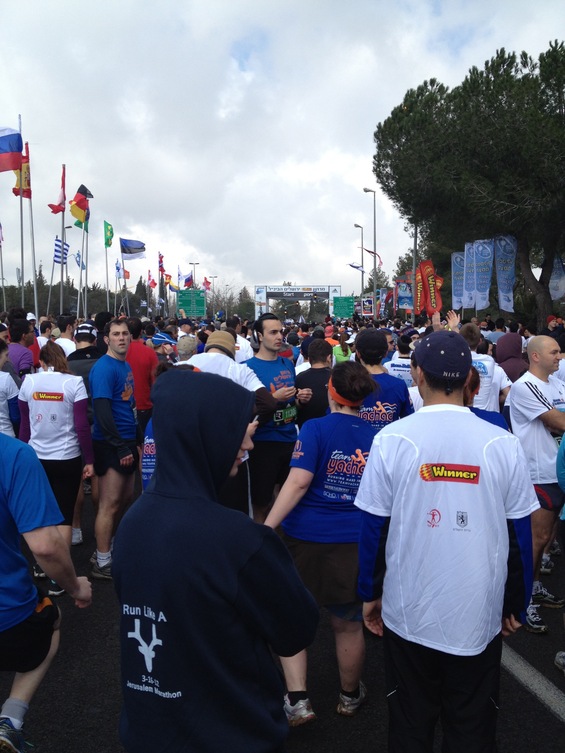 The
2nd Annual Jerusalem Marathon brought thousands of runners, Israelis
and tourists alike, to Israel’s capital city on March 15th. And
following the Boston-Haifa Connection Steering Committee meetings, which OTZMAnik Billie Hirsch blogged so beautifully about,
several past and present BHC members connected to Israel in a new way
by participating in different parts of the Jerusalem Marathon: Continue reading the full post here.
One of the many reasons I chose to make aliyah to Jerusalem is the vibrant and growing young adult culture. Across Israel, cities and towns are losing their young adults to "the center" - that is Tel Aviv and its surrounding suburbs. The beaches and nightlife are of course major factors, but the primary reason is that Tel Aviv is the country's economic center, so people move there for work. It's a phenomenon that the Boston-Haifa Connection Young Leaders is working to change in Haifa and promotes culture and opportunities for young adults to stay in Haifa past graduation from the University of Haifa or the Technion.
Jerusalem, for all its wonders, faces many challenges and divisions - between Jewish and Arab, Haredi and non-Haredi, and the haves and the have-nots, among others. Our capital city has gone through some tough times in recent years - with all-too-frequent suicide bombings during the Second Palestinian Intifada/Terror War of 2000-04, coupled with divisive city politics. However, Yerushalmim, or Jerusalemites, are proud of their city and the past few years have given rise to several grassroots organizations that are determined to create space for young adults to thrive and prosper in a pluralistic and open city.
Last night, I attended the opening meeting in a series called "Mifgashim B'Yerushalayim/Meetings in Jerusalem", organized by The Jerusalem Challenge, a think tank that seeks to connect the various young adult groups to see where they intersect, and how to continue developing this kind of social activism.
The event was a panel discussion featuring two social entrepreneurs who have done quite a lot in this regard, Kobi Frig, the creator of the Balabasta Festival in the Shuk; and Elyashev Ish-Shalom, owner of the Salon Shabazi, a local pub/cafe in Nachlaot that got its name because the couches on the inside are supposed to make up for the fact that apartments in Nachlaot are so small many people don't even have living rooms to put their couches. They discussed some of the challenges they faced getting their initiatives off the ground, while noting how much more lively the city feels today than it did just three or four years ago. Far too often people lament that Jerusalem is boring or that the conflicts weight too heavy, but the truth is that inspiring people like the two that spoke last.
After the event, I went with a couple of others to Salon Shabazi where we chatted with Ish-Shalom a little more and enjoyed a beer at the outside tables.
The Municipality has seized on this cultural renaissance, using the tagline "Jerusalem: Something Good Is Happening Here"(I've also seen "Something Special Happens Here"), and it's true. Just last week, I went to a music festival held outdoors in the Old City. Over the course of three nights, the city hosted dozens of musicians who performed for free on stages throughout the Old City, from the open plaza just inside Jaffa Gate to the Open and Closed Cardo. It was one of those "Only in Jerusalem" events that gets me excited to be part of the action now.
And a bit belatedly, I am posting a portion of a blog entry I wrote for the Boston-Haifa Connection about the recent Jerusalem Marathon. Follow the link at the bottom for the rest of the article.
More Than A Marathon
As we turn the calendar from March to April, welcoming Spring by preparing for Pesach, it’s also an indication that one of Massachusetts’ greatest traditions is only weeks away, the 116th running of the Boston Marathon. While Boston is the oldest and most elite marathon in the world, a city whose history dwarfs even Boston’s attracted attention – and runners – for its recent competition.
The
2nd Annual Jerusalem Marathon brought thousands of runners, Israelis
and tourists alike, to Israel’s capital city on March 15th. And
following the Boston-Haifa Connection Steering Committee meetings, which OTZMAnik Billie Hirsch blogged so beautifully about,
several past and present BHC members connected to Israel in a new way
by participating in different parts of the Jerusalem Marathon: Continue reading the full post here.Friday, March 2, 2012
Let It Snow! Let It Snow!

After multiple predictions of snow in Jerusalem that didn't quite pan out, I was delighted to wake up this morning to a layer of snow covering our capital city. While snow in the States over the past couple of years usually elicited an obstinate reaction from me (boy was I in a tizzy when the October snow almost derailed our Halloween Party at Paddington Bear Road), I couldn't have been happier to see snow not only on the ground, but still falling from the sky at a decent rate.

Jerusalem gets a "storm" of an inch or two once every three years, so I didn't want to miss my opportunity to see it first-hand. I had my morning coffee, checked the headlines, put on my winter gear and headed out in a hurry. After all, with constantly changing weather conditions I had no idea how much longer the snow would continue to fall. When I got outside, I could hear kids nearby playing in the snow and all the other people I passed on the street had huge smiles on their faces.

So naturally I was that much happier that I had left my apartment in a hurry after waking up and getting to enjoy the snow.
For more pics of the storm that was, here's a link to the album I posted on Facebook: ow.ly/9plGZ
Wishing everyone a Shabbat Shalom!
Sunday, February 12, 2012
Once Upon a Shabbat in Jerusalem
This past Shabbat, I had the opportunity to take in and enjoy the beginning of the day of rest unlike anywhere else in the world.
I headed out from my apartment about 20 minutes before candle lighting time towards the Old City. In the middle of the Mamilla outdoor pavilion, I heard the Shabbat siren ring out. For some reason, despite this being the third Shabbat I'd spent in Jerusalem since arriving last month, it was the first that I was able to hear the siren wail announcing the entrance of Shabbat and the ushering in of a day of holiness, of rest, and of peace. Back in the States, one of my favorite times of the week was the walk from home to shul for Kabbalat Shabbat, when I could feel all the stress and worry of the past week fall off my shoulders and a calm come over me.
I walked through Jaffa Gate into the Old City and crossed into the Jewish Quarter to head to the Kotel. It was still light out when I got there, and the plaza was filling up. Shortly after I entered the men's section and contemplated which service to join, a group of 40-50 Israeli Defense Forces soldiers entered, singing and dancing in unison. Fully in uniform, they, too, were stopping their routine, as this particular group was approaching its final days before becoming officers.
They invited everyone to join them and to celebrate the moment, and so I joined the officers-to-be, their commanders, along with tourists from around the world and fellow Israeli Jews. I know it sounds a bit cliche, but it was truly amazing to look around this circle that had expanded throughout the entire men's area of the Kotel and see Jews of all different backgrounds and colors, levels of religious observance, and abilities to speak Hebrew. But singing "Am Yisrael Chai", we reaffirmed the very reason I decided to move here.
_____
On an entirely unrelated note, I finally bought a drip coffee maker last week and was walking around on Wednesday or Thursday to buy some coffee to take home with me when I came across the following storefront. Needless to say, I stopped in, but didn't wind up buying coffee from them...maybe next time!

Friday, February 3, 2012
Some #Obstinate Reactions to Close Out My First Month
As my first month as an Israeli citizen draws to a close, I felt it was only appropriate to share what was quite an #obstinate reaction to a situation that was unnecessarily annoying.
Way back on the day after I landed, one of my relatives took me to Rami Levy get a cell phone plan for my iPhone. As they described over the phone and again in store, it's a pay-as-you-go plan with very good rates per minute and per SMS and unlimited internet access. The only hitch was that since I hadn't opened an Israeli bank account yet, they needed my cousin to use her credit card for the account and we would switch payment options when I got my bank set up (apparently international Visa and MasterCards weren't acceptable).
Flash forward to last week, I have my bank's debit card, which has the "IsraCard" logo, Israel's internal credit card company, and we go back to the store to get the payment switched over. They look at my card and tell me, "Well we can't use this for payment because it's not a credit card, it's a debit card". So I said, "Exactly. The money comes directly from my bank account without an intermediary" and they told me, the only method of payment they accept is an Israeli credit card. I asked about other options - a direct debit plan from my bank account, my international Visa, MasterCard, AmEx, whatever.
When they still said no I got a bit #obstinate. I noted that were I to get an Israeli credit card, I would have to pay a monthly fee for it (as there are always hidden charges to anything bank related in this country) and that in every single other situation, my CapitalOne Visa, which doesn't charge foreign transaction fees, would be golden, including, as I mentioned, at the Rami Levy supermarket that was attached to the store. Since Israeli law prohibits cell phone companies from signing you to a contract you can't get out of, I told them I would go to the other three major cell phone companies, pick whichever deal they had that was best, and switch the next day, and that's exactly what I did and am now happily an Orange subscriber! Oh and I also congratulated them for creating unnecessary obstacles for new immigrants...all in Hebrew so it's probably a good thing I don't really know too many curse words!
That moment of obstinance aside, things here are good, although it will be weird not being in Boston for the Super Bowl Sunday night/even later Sunday night here. This past week has brought some change into my apartment and I now have a new roommate. As I mentioned in my last post, my friend Sarah, who was my madricha on when I was here on OTZMA two years ago, has now moved in and we've been hard at work over the past three days cleaning, rearranging and reorganizing the apartment. I now have a new bed and a little shelving unti for all my DVDs which is great, and things feel more orderly and a bit less haphazard.
Wishing you a Shabbat Shalom wherever you are!
Tuesday, January 24, 2012
Three Weeks In
So much to tell and yet I haven't found time until now to post a second update. Tomorrow marks the beginning of my 4th week in Israel, and yet there are still 3432324 things to do slash errands to run when my Hebrew classes end at 12:45pm every day!
I'm now in my second week of classes in Ulpan, and I've been really enjoying it so far. This particular program is designed for young adults approximately 23-33 so I'm pretty much smack dab in the middle. The directors have said there are about 150 students from 20 countries. In my class alone, we have other people from the States, but also Canada, the UK, France, Australia and Argentina, so it's a really nice mix. I can tell already that these five months will really do wonders for my vocabulary, not to mention my desire to be able to read and write at an academic level.
I've started to get to know some of the other students both in my class and the other classes, and one of them, a guy from LA named Jaymes was my bartender the other night at Mike's Place when I went to watch the AFC Championship game. Certainly in our class, we already have good rapport with each other, so the coming weeks and months should be enjoyable.
Starting next week, I'll be getting a new roommate, and while she might not respond to calls of "Issssberrrrrrttt!??!" the way Alex did, I'm very much looking forward to her moving in. It's a funny story (and for all of you who were on OTZMA with me, you'll find this particularly funny). because Sarah Cohen, while not related to me, was my former madricha or participant coordinator, when I was on OTZMA. She made aliyah several years ago, so she knows the country and the neighborhood better than I do, so once she moves in, we'll re-arrange some of the furniture, put some things up on the walls and the apartment will feel a little more settled.
What else? I'm in the process of finding a gym to join (one where I can rock out with my do rag and sweatbands) so I'm actually heading out for a test workout at a gym in town. And in case anyone is looking to call or wants to look me up on iMessage or What's App, my phone number is +972-50-70-20-552, or from inside Israel, 050-70-20-552.
Monday, January 9, 2012
Ani Oleh Chadash - I am a new immigrant

A few days into my journey as an oleh chadash, a new Israeli immigrant, the only word that comes to mind is "overwhelming." But as hectic and chaotic as a move like this is, it's landscapes like the one above that make it worth it.

Thankfully, I have family and friends on both sides of the ocean who are incredibly helpful and supportive as I make this transition. I haven't spoken to a single Israeli family member or friend who has not said "let me know how I can help you" or "Come over for a meal or Shabbat" or "our house is always open." This past Shabbat, my relatives in Efrat greeted me with pints of Ben & Jerry's (four of them!) and lots of love, and I've gotten similar open arms embraces, both literally and figuratively, from every other person I've reunited with here.
Something my aunt June reminded me of the other day, and that I thought about as well when I was packing my suitcases in Boston, was how fortunate we are to be living at the present moment in time with so many ways for global communication. Just over a hundred years ago, all eight of my great grandparents packed maybe one suitcase and boarded a ship bound for the United States, knowing they would likely never see the family they were leaving behind or visit their places of birth, nor might they find the family who had already come to the US. Meanwhile, I can call, Skype, Gchat and iMessage anyone anywhere and anytime, and I had the luxury of bringing four suitcases packed to the brim with clothes and other personal items, along with two additional carry-ons.
I can also share some of my experiences in this space, which I hope will be at least sometimes interesting, possibly humorous, and at the very least, a way to keep tabs on how I'm doing even when I can't see you all when I'd like to. Yalla balagan!
Thursday, December 22, 2011
My Boston-Haifa-Jerusalem Connection: An Open Letter to the Boston Jewish Community
First of all - Thank You.
I have called Boston home for nearly all of my 27-plus years on this planet, and there are many individuals and organizations in this community to whom I will be forever indebted for contributions to my life too numerous to detail in this space.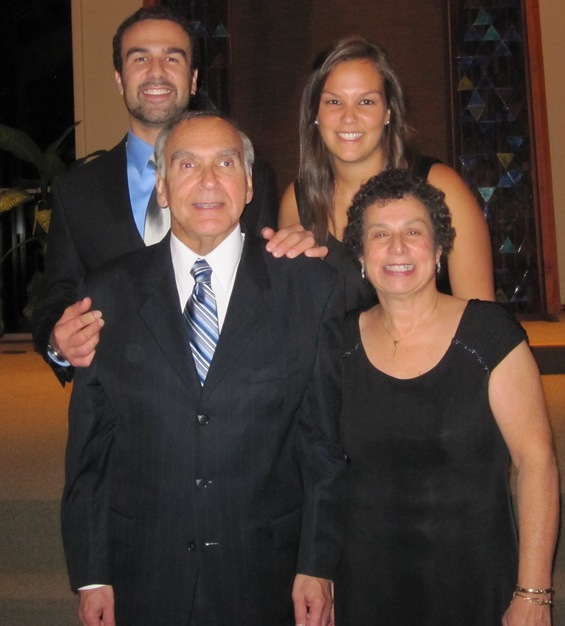 Of
particular note are the three people closest to me - my parents, Ted
and Meda, and sister Becca for their unconditional love and support.
In a couple of weeks, I will uproot my entire life and leave the only city I’ve ever truly known well in order to make Aliyah and move to Israel. I will leave family and friends behind in order to fulfill a dream, our dream, the dream of the Jewish people. Growing up, I was never that kid who knew what he wanted to be when he grew up – a doctor, a scientist, a lawyer.
The opportunity to become an Israeli, to live in and contribute to the Jewish culture and renaissance in the Land of Israel, something I know my ancestors prayed for and dreamt about, is my dream.
Those of you who know me well know that I love this country, and that there’s a reason the 4th of July is my favorite holiday (and not just because fireworks are one of my favorite things in the world). But ever since I got off a boat on the shores of Haifa for the first time when I was 15, I’ve felt a visceral, emotional attachment to Israel that has never been present with America in quite the same way (the trip with Camp Young Judaea in New Hampshire was designed to simulate the experience of those on the Exodus and other ma’apilim in the final years of the British Mandate). Like many aspects of the establishment of the State of Israel and the return of the Jewish people to our homeland, it defies a rational and logical explanation. The closest thing I’ve been able to come up with is the title of a book by the inspirational author, Daniel Gordis, "If A Place Can Make You Cry."
Two and a half years ago, I set out on another journey to Israel as a participant on a program called OTZMA, an experience that was at the same time similar yet also profoundly different to the one on which I am about to embark. OTZMA is a 10-month post-college community service and leadership training program run by The Jewish Federations of North America, and sponsored by MASA and locally by CJP and the Boston-Haifa Connection. I had the opportunity to live and volunteer in Ashkelon, Haifa and Jerusalem and to appreciate the many ways these three cities differ.
Since I was aware of the American bubble that surrounded the 38 of us throughout the year, I made a concerted effort to get outside of that bubble and to experience Israeli society as much as possible, spending chagim and many Shabbatot with my family, some of whom are sabras and others who are olim, some of whom are religious, and others chiloniim (secular).
A crucial piece of this effort was getting involved in the Boston-Haifa Connection, where I spent some of my time volunteering during the three months I lived in Haifa. Not only did I learn about all of the programs and activities
the partnership funds and runs, but I also experienced the true power
and value of the connection and the bonds formed between Bostonians and
Haifaiim. The partnership’s Young Leadership Committee, which had just
been started a few months earlier, greeted the four of us from OTZMA who
would be living in Haifa with open arms and friendship. They took time
out of their busy schedules to make sure we got to experience Haifa the
way residents see it, whether that meant coming with them to the best
bars and clubs on the weekend or for the best knafe in the German
Colony.
As a direct result of the excellent education I received as an elementary and middle school student at Solomon Schechter in Newton, I speak Hebrew fluently with almost no trace of a foreign accent, which enabled me to get to know my peers in Haifa and elsewhere in Israel on a much deeper level than had I been forced to rely heavily on my English.
It was while I was in Haifa that I first realized Israel was not only the future of the entire Jewish people, but my future as well. This was a feeling that stayed with me, and by the end of my year on OTZMA, I was seriously considering Aliyah and went for an informational interview with Nefesh B’Nefesh, the organization tasked with Aliyah from the US, Canada, and the UK. But for the same reasons that I can’t quite explain my emotional connection to Israel, I am aware that it has an almost mystical hold over me and that this was a decision I needed to make from the US; if Aliyah was the right decision for me, it would be the right decision for me to make after four, six, eight or 10 months of being back the States.
And indeed it was and is the right decision for me, and I have had enough time to think about it and analyze all of it with a clear head. I’m under no pretenses that it will be easy. I’m notoriously bad at goodbyes, and the process I have already started of saying goodbye to family and friends has not been easy, nor will it get any easier in the coming days, or even once I’m settled in my new home.
There are many things I’ll miss about this town and about the incredibly vibrant Jewish community here. At CJP’s Young Adult Open House Party back in September, I stood at one corner behind the Boston-Haifa Connection Young Leaders table and marveled at how the gigantic banquet hall room was filled corner to corner with 50 different organizations that cater to young adults, and dozens upon dozens of young Jews trying to map them all out and find out what each is about. If you are young and Jewish in Boston, there is an organization or group for you. I will particularly miss the organizations I have worked the most closely with - The David Project, CJP, the Boston-Haifa Connection, AJC and AJC ACCESS and am looking forward to following their important work from Israel.
But for me, the road from Boston to Haifa continues on to Jerusalem, the eternal capital of our people. I have chosen it as my new home and am excited to explore the opportunities that await me and to make my contribution to the 21st century Zionism, for as we learn from Shammai in Pirkei Avot, “Say little and do much.”
L'hitraot B'Aretz,
Matt Cohen
This post was originally published by the Boston-Haifa Connection’s blog on JewishBoston.com.
I have called Boston home for nearly all of my 27-plus years on this planet, and there are many individuals and organizations in this community to whom I will be forever indebted for contributions to my life too numerous to detail in this space.
Of
particular note are the three people closest to me - my parents, Ted
and Meda, and sister Becca for their unconditional love and support.In a couple of weeks, I will uproot my entire life and leave the only city I’ve ever truly known well in order to make Aliyah and move to Israel. I will leave family and friends behind in order to fulfill a dream, our dream, the dream of the Jewish people. Growing up, I was never that kid who knew what he wanted to be when he grew up – a doctor, a scientist, a lawyer.
The opportunity to become an Israeli, to live in and contribute to the Jewish culture and renaissance in the Land of Israel, something I know my ancestors prayed for and dreamt about, is my dream.
Those of you who know me well know that I love this country, and that there’s a reason the 4th of July is my favorite holiday (and not just because fireworks are one of my favorite things in the world). But ever since I got off a boat on the shores of Haifa for the first time when I was 15, I’ve felt a visceral, emotional attachment to Israel that has never been present with America in quite the same way (the trip with Camp Young Judaea in New Hampshire was designed to simulate the experience of those on the Exodus and other ma’apilim in the final years of the British Mandate). Like many aspects of the establishment of the State of Israel and the return of the Jewish people to our homeland, it defies a rational and logical explanation. The closest thing I’ve been able to come up with is the title of a book by the inspirational author, Daniel Gordis, "If A Place Can Make You Cry."
Two and a half years ago, I set out on another journey to Israel as a participant on a program called OTZMA, an experience that was at the same time similar yet also profoundly different to the one on which I am about to embark. OTZMA is a 10-month post-college community service and leadership training program run by The Jewish Federations of North America, and sponsored by MASA and locally by CJP and the Boston-Haifa Connection. I had the opportunity to live and volunteer in Ashkelon, Haifa and Jerusalem and to appreciate the many ways these three cities differ.
Since I was aware of the American bubble that surrounded the 38 of us throughout the year, I made a concerted effort to get outside of that bubble and to experience Israeli society as much as possible, spending chagim and many Shabbatot with my family, some of whom are sabras and others who are olim, some of whom are religious, and others chiloniim (secular).
A crucial piece of this effort was getting involved in the Boston-Haifa Connection, where I spent some of my time volunteering during the three months I lived in Haifa. Not only did I learn about all of the programs and
activities
the partnership funds and runs, but I also experienced the true power
and value of the connection and the bonds formed between Bostonians and
Haifaiim. The partnership’s Young Leadership Committee, which had just
been started a few months earlier, greeted the four of us from OTZMA who
would be living in Haifa with open arms and friendship. They took time
out of their busy schedules to make sure we got to experience Haifa the
way residents see it, whether that meant coming with them to the best
bars and clubs on the weekend or for the best knafe in the German
Colony.As a direct result of the excellent education I received as an elementary and middle school student at Solomon Schechter in Newton, I speak Hebrew fluently with almost no trace of a foreign accent, which enabled me to get to know my peers in Haifa and elsewhere in Israel on a much deeper level than had I been forced to rely heavily on my English.
It was while I was in Haifa that I first realized Israel was not only the future of the entire Jewish people, but my future as well. This was a feeling that stayed with me, and by the end of my year on OTZMA, I was seriously considering Aliyah and went for an informational interview with Nefesh B’Nefesh, the organization tasked with Aliyah from the US, Canada, and the UK. But for the same reasons that I can’t quite explain my emotional connection to Israel, I am aware that it has an almost mystical hold over me and that this was a decision I needed to make from the US; if Aliyah was the right decision for me, it would be the right decision for me to make after four, six, eight or 10 months of being back the States.
And indeed it was and is the right decision for me, and I have had enough time to think about it and analyze all of it with a clear head. I’m under no pretenses that it will be easy. I’m notoriously bad at goodbyes, and the process I have already started of saying goodbye to family and friends has not been easy, nor will it get any easier in the coming days, or even once I’m settled in my new home.
There are many things I’ll miss about this town and about the incredibly vibrant Jewish community here. At CJP’s Young Adult Open House Party back in September, I stood at one corner behind the Boston-Haifa Connection Young Leaders table and marveled at how the gigantic banquet hall room was filled corner to corner with 50 different organizations that cater to young adults, and dozens upon dozens of young Jews trying to map them all out and find out what each is about. If you are young and Jewish in Boston, there is an organization or group for you. I will particularly miss the organizations I have worked the most closely with - The David Project, CJP, the Boston-Haifa Connection, AJC and AJC ACCESS and am looking forward to following their important work from Israel.
But for me, the road from Boston to Haifa continues on to Jerusalem, the eternal capital of our people. I have chosen it as my new home and am excited to explore the opportunities that await me and to make my contribution to the 21st century Zionism, for as we learn from Shammai in Pirkei Avot, “Say little and do much.”
L'hitraot B'Aretz,
Matt Cohen
This post was originally published by the Boston-Haifa Connection’s blog on JewishBoston.com.
Sunday, December 18, 2011
I'm Baaaack
I am excited to be re-starting this blog as I begin a new chapter in my life, moving to Israel as an oleh chadash in just a couple of weeks. In the year and a half this space has been dormant since the end of OTZMA, I've had the opportunity to contribute to The David Project's online blog, as well as writing and editing the Boston-Haifa Connection's blog. I look forward to sharing my thoughts and adventures, and yes, all those "only in Israel" moments that are bound to pop up along the way. Az Yalla!
Monday, June 14, 2010
A Year of Opportunities
Amazing. Life-changing. Inspirational. I can think of a lot of words, almost all of them clichés, to describe my year in Israel, but naturally none can even begin to sum it all up. How can you describe the pure joy of dancing at the Kotel on Yom Yerushalayim? The satisfaction of standing on the banks of the Kinneret after completing the Yam L’Yam hike? The ability to spend time with and get closer to my Israeli relatives? The amount of information I’ve learned about Judaism, Israel, and myself?
I have spent the past 10 months living in Israel as a participant on OTZMA, a post-college community service-based program sponsored by The Jewish Federations of North America, the Jewish Agency for Israel and MASA. OTZMA’s structure afforded me the opportunity to live in three different cities – Ashkelon, Haifa, and Jerusalem – and to learn what daily life is like in Israel in these very distinct places. While there are certainly plenty of cultural things I’ve had to adjust to (the Sunday-Thursday work week, the complete chaos that is a line at the supermarket), I have enjoyed each and every day I’ve had here.
I love the energy and vibrancy of this country, as well as the amazing calm and tranquility that come every Friday, 18 minutes before sundown. I love that a couple of weeks ago, the driver of the Egged bus I was on stopped in the middle of the street to pick up a hand-delivery of freshly baked rugelach. I love how I’m constantly being challenged to think about what being Jewish means to me and to re-consider my level of observance. I love how despite going years since actively pursuing any kind of Torah or Tanach study, the things I’ve experienced and the Biblical connections to the places I’ve visited make it impossible for me not to re-engage in our wealth of religious sources.
One of my favorite parts of OTZMA has been the education component, which has allowed us to learn about the wide range of domestic and foreign issues facing Israel and to meet with both government policymakers and NGO representatives. We’ve traveled all around the country, from Har Ben Tal in the Golan to Sussiya and the southern Hevron Hills to Yerucham and the Negev. We even had our own mock “Camp David 2010” conference to study in-depth the major final status issues surrounding the peace process. Each of these sessions, seminars, and trips has left me wanting to learn more, adding books and other resources to my “to read” list.
While I’ve gotten into my fair share of debates and arguments about some of the major political issues, it’s only by being a part of a community that I’ve began to truly understand the real challenges facing Israelis in their day-to-day lives. In Haifa, for example, I helped teach a television production class to high school students with behavioral issues, and I was able to see how this kind of educational approach can spark these kids to turn their lives around. I also got to work with Ethiopian Israelis in both Ashkelon and Haifa and learned about the difficult balance between preserving Ethiopian culture and absorbing or assimilating into Israeli culture.
It’s been fascinating to talk to all kinds of Israelis about life here. Whether religious or secular, Ashkenazi or Sephardi, third-generation or oleh chadash, Israelis care deeply about the future of their country, and as anyone who’s spent time here knows, they hold nothing back when it comes to their opinions of how best to move forward. And the great thing is there are people truly working to change and improve life here. During my two months as an intern at The Jewish Federations of North America’s Israel office, I’ve had the opportunity to see how American and Israeli philanthropy supports social change all over Israel. Just as it is in the United States, the gap between rich and poor in Israel has become a huge problem, and it’s critical to the country’s future that there are significant resources going to aid young adults find affordable housing, provide better after-school enrichment programs for youth-at-risk, and boost economic development in the Negev.
As the campaign to de-legitimize Israel grows, it’s become increasingly important for Jews everywhere, and specifically young Jewish adults, to consider everything Israel has given to us and to the rest of the Jewish world in just over 62 years of existence. For the first time in literally thousands of years, the Jewish people have a country of our own, one where we can decide our own future and live freely as Jews. For generations upon generations, our ancestors prayed for the return to Jerusalem and to this land, and now that we have it, it’s our individual and collective responsibilities to ensure its success.
A century ago, the original Zionist chalutzim came here and settled and built the land. They drained the swamps, developed an infrastructure and gained international recognition for the re-establishment of a Jewish state. The generation that followed paid a heavy price to defend the nascent state over years and decades of wars and also played a crucial role in developing and transforming the country’s economy. The challenge set forth to me and my generation is to figure out how we will continue their Zionist ideals and what we will do to ensure that Jewish life continues to flourish, not only in Israel, but in the Diaspora as well.
Like many of my fellow OTZMAnikim, one of the reasons I came here was to figure out what to do with the rest of my life. After graduating from college and working for three years at what had been my dream job, I realized my real passion lies with the Jewish people and with Israel. This year has re-affirmed that feeling as well as my commitment to finding a career that helps me do my part to strengthen the Jewish community.
I want to take this opportunity to thank the people and organizations who have made this experience possible for me: The Jewish Federations of North America, MASA, and Combined Jewish Philanthropies in Boston for their support of the OTZMA program as a whole and their financial contributions towards my personal participation. The OTZMA staff has worked tirelessly to provide us the best possible experience, coordinating some amazing education seminars and what I’m sure will be a memorable final tiyul. I also want to thank my fellow OTZMAnikim, without whom this year would have been a lot more difficult. We should all be proud of the amazing work we’ve done as individuals and as a group, and of the way we’ve become a family, celebrating holidays together and supporting each other through the hard times along the way. You’ve all challenged me, kept me smiling, and yes, provided me with tons of ice cream, and for our experience together this year, I feel truly blessed.
Originally written for The Federation Connection Blog of The Jewish Federations of North America.
Tuesday, June 1, 2010
Yam L'Yam/Sea To Sea
Somehow we did it. This past weekend, Jeremy, Sam, Brett, Ari and I completed the cross-country hike known as Yam L’Yam, or Sea To Sea. The hike took us from Israel’s western coastline of Yam HaTichon/the Mediterranean Sea, to its eastern border of Yam HaKinneret/Sea of Galilee, a 65+ kilometer hike (40 miles, not counting the inclines and declines, including Israel’s 2nd-highest mountain, Mount Meron of 1208 meters).

It was without a doubt the most physically challenging and mentally demanding thing I’ve ever done. There were many moments along the way where I was tempted to quit and others where I didn’t think we’d be able to finish the hike. But we did, and I’m very proud of this accomplishment.

After waking up around 5:30am, our first Manbreakfast of granola, Captain Crunch, and some nuts took place shortly thereafter. By 6:45am we filled a symbolic small bottle with water from the Mediterranean and we were off. After a few kilometers, you know, just for fun, we got to the beginning of the trail at Achziv, which is well identified because it takes you through a banana grove. The big adjustment for day one was dealing with the giant weight on our backs. But as you’ll be able to see from the pictures, the views and scenery were gorgeous, so at least we had that going for us.
We stopped for lunch near the base of Montfort, a Crusader fort somehow built atop a pretty steep mountain. Our Manlunch consisted of peanut butter and chocolate spread sandwiches, some salami, and apples. After lunch, we ventured through the first of several foresty trails cutting around and through little river streams and very green foliage. But as would be the theme with every day, the last leg was the hardest. We had a mountain and then some to climb to get to the end of our day’s hike. The initial incline was a quite a workout, but after about half an hour of steady climbing and several “I can feel it’s right around this corner” comments, we were all feeling pretty frustrated. But finally we got to the top of the nature reserve and exited to the road at the trail head.
Now this was where we expected to find our water source and campsite easily. Neither were to be found, but we checked the map and found the town of Abirim was right down the road, so we headed there at least to find some water. Just before reaching the gates, we met a man walking by us who had spent a few years studying in Santa Barbara, California. He invited us into the tiny town of 40 families to grill near the little park area just beyond the gates and to camp right there. The water tap was literally a stone’s throw away from our campsite so we couldn’t have been happier. We threw down our bags and started putting together some dinner, cutting up peppers, onions, potatoes and sweet potatoes, adding some beans, wrapping them together in a foil and tossing them on the grill. The dinner was cooked to perfection and tasted great after a very long day of hiking. And then at the unbelievably late hour of 8:45pm we headed to bed to prepare for Day 2.
We packed up early in the morning and left Abirim, and for the first portion of the day we were doing some highway hiking, going through the towns of Fesutah, Elkosh and Hurfesh. Despite having to walk along the side of the road for several kilometers, it was an interesting landscape passing through an Arab, a Jewish and then a Druze town. Just past Elkosh we picked up a hiking trail and all of the sudden we were back to the beautiful forest hiking we all love about the north.

Our goal for the day was to get to the base of Mount Meron by 2pm, to give us enough daylight to climb the mountain, enjoy the view and the experience, hike back down and set up camp. We set a great pace for the first part of the day, so we got Meron according to schedule, re-filled our waters and joined the Israel Trail, the hiking trail that goes from Tel Dan near the Lebanese border all the way down to Eilat (on our third day, as we were going south, we passed by a few different hikers who had in fact started in Eilat and who had almost made it across the length of the country…talk about an accomplishment). But back to us…When faced with a 300 meter ascent over the course of just one kilometer, there’s only one thing to do: power through it as quickly as you can. This was a perfect example of a time where I didn’t know how I was going to push through. After ten minutes of really booking it up the mountain, my legs were gassed, but since my friends were still moving, I was still moving. But as is usually the case with these situations, the view from the top was worth it. Even though there was a bit of a haze, we could see a good part of the north, including the city of Tzfat, which was really cool because when we were there for the 2-week Livnot program, we could see Meron from the balcony, and now we had switched spots.
It took a bit longer than we anticipated to descend and to get to our campsite, but we did have enough time to gather our wood and set up our tents for the evening while it was still light out. There was a bit of a scare when we were sitting around the table finishing up dinner and could see a fox in the not too distant bushes waiting for us to clear out so he could eat our food. So we made sure to bring every last bit of food scrap to the dumpster by the water tap across the way from our camp site and Mr. Fox was never to be seen again.
Day 3 began great – we hiked through Nahal Amud and wound up joining up with a portion of a hike we had done together back in December while we were on Livnot. There was a particular bridge crossing over the river where we had stopped for a chevruta, or learning session, on that hike, and so we took a break at that same bridge in honor of Livnot (and wrote a little note for the current Livnoters who will be doing the hike in the next couple of days).
But as Nachal Amud turned into Nahchal Amud Tachton, things took a dicey turn. Our pace, which had been really quick for the first couple of hours, quickly ground to nearly a halt as we dealt with some really tricky climbing up and down. The hardest part was not really knowing how many kilometers we’d gone since the last landmark on the trail, since most of our hiking was up and down the wadi instead of steady forward progress.
We took a break for our last manlunch and re-charged our batteries. Within 45 minutes, we had reached Highway 85 and knew we were entering the homestretch, the final 10 kilometers of Yam L’Yam. The trail took us underneath the highway and for me, through the toughest stretch of the hike. By this point, I had drank 4 of my 6 liters of water and knew I needed to keep drinking to avoid getting dehydrated on the hottest day of our hike. It sure didn’t help that the majority of this next stretch would be in the open sun with very little shade. Thankfully the rest of my friends had water to spare and made sure I had enough water.
After about 2.5 or 3 kilometers of hiking at a good pace, the terrain became our enemy again. We entered a section that was absolutely beautiful to look at, but that slowed our pace considerably. Assessing the situation, and accounting for the fact that we not only needed to get to the Kinneret while it was still light, but that we needed to get to Tiberias to catch the bus back to Jerusalem, we decided to change course and get to the upcoming highway and take the highway to the Kinneret, as opposed to staying on the Israel trail until the town of Ginosar on the water.
But once again, we had no way of telling how far away from that turnoff we were. Finally, we turned a corner and could see power lines, signaling the highway and civilization couldn’t be far. And sure enough, a few steps later, we could see the highway. We got up to the highway, took a break, and knew we were less than an hour away from our goal. We began the final journey, and as we cleared the first hill on the highway, the Kinneret came into sight for the first time, and it had never looked more beautiful. Talk about a morale boost, to be able to see our goal right in front of us, the city of Tiberias on the right, the Golan Heights on the other side of the water. I felt the excitement build as we got closer and closer to the water.

We stopped at a gas station to refill our water and then set off for the water, only because of our re-routing, we didn’t wind up at an area with a public beach. But from the map, there appeared to be several paths going from the main road down to the water. And to take the title of another Yam L’Yam blogger, we went from Bananas to Bananas, cutting through another banana grove to get to what we thought would be an open beach. It wasn’t, but after some weaseling, we found an open path and stood on the banks of the Kinneret.
After three long, tiring days, lots of trail mix and water, and perseverance, we made it. Ari emptied our little bottle of water from the Mediterranean into the Kinneret and it was an unbelievably satisfying moment for all of us, knowing we completed this very daunting and challenging journey across Israel.
Saturday, May 15, 2010
Yom Yerushalayim: The Essence of Zionism

"Im eshkachech Yerushalayim, tishkach yemini"/"If I forget you, O Jerusalem, Let my right hand wither."
From the moment I first knew I wanted to come to Israel on OTZMA, I was excited about living in Tel Aviv for Part 3 – the beach, the big city, the food. I didn’t yet know what kind of internship I was looking for, but I figured I would find it in Tel Aviv. But the more I thought about it, the more I realized I needed to be in Jerusalem. It wasn’t just that the places that interested me most were here, although from a practical standpoint that certainly contributed to my decision. But the real reason lies in the importance of Jerusalem to the Jewish people. It is here that the two Temples stood, and to here that generations of Jews prayed to return, to this day facing Jerusalem and the Temple Mount specifically during prayer.
So it is this connection to Jerusalem that made celebrating Yom Yerushalayim so special. It began Tuesday night with the Yom HaStudentim/White Night concert in Gan Sacher featuring an odd yet entertaining lineup of Israeli and American bands, from Hadag Nachash to 70s funk band Kool and the Gang. But the real highlight was the sunrise performance by Ehud Banai, a Jerusalemite and one of Israel’s most well-known and respected singer/songwriters. The entire Banai family still lives in the city, and Ehud has written several songs about living here, particularly “1 Haagas Street” about his home right by the Machane Yehuda shuk.
Flash forward several hours to Wednesday evening and the unbelievable scene at the Kotel. Jews of all kinds – young, old, Ashkenazi, Sephardi, haredi, hiloni/secular – joined together, proudly hoisting Israeli flags and dancing at the the Kotel plaza, celebrating 43 years of the reunification of Jerusalem, and the ability of Jews to return to the Old City, something denied during the 19-year Jordanian occupation of the city from 1948-1967. Celebrating Yom Ha’atzmaut on the streets of downtown Jerusalem was great, but it didn’t compare to the emotion, the pure joy, that I experienced and watched everyone around me experience at the Kotel.

Wednesday, April 21, 2010
Happy 62nd, Israel!

The Fourth of July is perhaps my favorite American holiday. So it should be no surprise that Yom Ha’atzma’ut is one of my favorite Israeli holidays, and for many of the same reasons: summer weather, barbeques, celebrations, and of course, fireworks. But as proud of an American as I am, Yom Ha’atzma’ut is more meaningful to me as a Jew. It celebrates the return to our Biblical and historic homeland, to Jerusalem, the eternal capital of the Jewish people, and the fulfillment of God’s promise to us as His Chosen People to bring us back to the Land of Israel.
While I’ve been able to attend memorial ceremonies and Independence Day parties before thanks to the large and vibrant Jewish community in Boston, the experience obviously cannot compare to what it’s like here in Israel. But before I get to celebrating Israel’s 62nd birthday, I will write a bit about Yom Hazikaron, and the importance of remembering the soldiers who died defending the State of Israel and her citizens, and all the men, women, and children murdered by Islamic terrorists simply because they were Jewish.
I marked Yom Hazikaron on Sunday night by attending a memorial ceremony designed for American olim and other English speakers. The ceremony began with the traditional siren, when all of Israel comes to a standstill to observe a minute of silence. Then, there was a tribute to Staff Sgt. Ari Weiss, an American oleh and sargeant in the Nahal Bridgade, who was killed three weeks shy of his 22nd birthday in Shechem battling Hamas terrorists in 2002. A touching video showcased who Ari was and why he was so loved by his friends and family. Ari’s father, Rabbi Stewart Weiss, spoke beautifully after the video tribute, re-telling the audience what he said to the people who attended his son’s funeral: that everyone go home and sing “Am Yisrael Chai” in Ari’s memory. Thank God I haven’t personally suffered the loss of anyone serving in the IDF, so the ceremony really helped me internalize and personalize what it means to lose a loved one.
I have never lived a day in my life without the State of Israel being a fact, and it’s easy to take her existence for granted. But the juxtaposition of Yom Hazikaron and Yom Ha’atzma’ut reminds us that throughout Israel’s history, its citizens have had to defend the State each and every day, and often with their lives. This is why it’s so appropriate for the day of mourning to be followed by celebration, reminding us that these losses were not in vain, that helped create and protect the State of Israel.

So Monday night, as the sun set, mourning and sadness turned into jubilation and celebration. I went with a group of friends to the downtown Jerusalem area of Ben Yehuda Street and it was, as you can imagine, quite a scene: older people, younger people, families, teenagers, everyone really, enjoying the revelry. Over on Hillel Street, there were two stages set up with DJ’s playing different kinds of music and people hanging out and dancing. And of course, my favorite event, two sets of fireworks, one shot off around 11:15pm, the other at midnight (I must say that coming from Boston, I am extremely spoiled when it comes to fireworks, and I have yet to see a display that comes close to the yearly displays in Newton and Boston). After the fireworks, we headed to Machane Yehuda, where the entire shuk was transformed into yet another street party, this one aimed more at young adults. There were makeshift bars set up, a stage with a band, and streams and streams of young Zionists celebrating Independence Day. Then yesterday was part two of the celebration, joining the all-Israeli activity of barbequing in Efrat with my cousins Ephraim, Batya, Shlomo, Julie and their kids…plenty of hamburgers, hot dogs, chicken, and steak to go around.
Saturday, April 17, 2010
Italia
UPDATE...link to the pics!
Now that I’m settled in the new apartment on Har Hatzofim in Jerusalem, I have a chance to post an update on my trip to Italy over vacation. Here’s a quick little rundown:
 Best Gelato – Vivoli, Florence
Now that I’m settled in the new apartment on Har Hatzofim in Jerusalem, I have a chance to post an update on my trip to Italy over vacation. Here’s a quick little rundown:

Best Dinner – La Giostra, Florence
Best accommodations – Florence
Best views - Florence
Best City – Florence
Oldest history - Rome
Best Shabbat Experience – Venice
Co-MVPs – Lindsey and Annie for helping us plan everything so well (thanks, ladies!)
What can I say about Italy…other than Florence rocks. Well, for starters I probably ate my weight in gelato, so the trip had to be amazing. I traveled for a week to Rome, Florence and Venice with Tom and Adam, and while I would have loved more time to see more of the country, we did a great job maximizing our time and seeing everything we had set out to see.
Our first day was a Monday in Rome, the only less-than-perfect-weather of the trip– it alternated between sun and brief rain showers. We hit the Ancient Center area, heading first to the Colosseum which is just as massive as it looks in pictures. We took a tour of the inside as well, and it’s truly amazing to think how it was built so many hundreds of years ago with the technology they had back then. Next was Palantine Hill and the Roman Forum, where the major buildings and temples of the Roman empire were built. As a Jew, the most important structure there is the Arch of Titus, which commemorates the destruction of the Second Temple and of Jerusalem in the year 70 CE. On the inside of the arch, very clearly, there is a depiction of the Romans hauling the menorah away and enslaving many Jews (some of whom were used to build the Colosseum). In the afternoon, we walked around to some of the other main sites in the city, Piazza Navona, Tiber Island, and Piazza Campo di Fiori.
Tuesday we went to Vatican City and toured St. Peter’s Basillica. One thing I was struck by, first there and then at each of the other churches we visited is how intricate the artwork is, where there are literally hundreds of little paintings and sculptures adorning the insides of these places of worship. We then climbed up nearly 500 steps to the top of the basilica dome for an amazing panoramic view of Rome, the only annoyance being the crowds at the top making it very difficult to move from one end to the other. After walking back down, we headed to the Sistine Chapel and were amazed at the enormous lines we passed. Thankfully, we had pre-booked our Vatican Museum tickets, so we bypassed the entire 3-block long line and went right in. Obviously everybody goes primarily to see the Sistine Chapel, but the way you get there is an interesting way to see other parts of the museum. You follow the signs for the Sistine Chapel, and you wind up walking through all sorts of galleries and rooms full of Renaissance art and seeing a lot of cool things you weren’t planning on seeing. It was along the way that I saw some beautiful ceiling paintings, impressive probably most because of the vibrant colors and the location. But of course what I saw along the way paled in comparison to what we saw inside the Sistine Chapel, which definitely lives up to its reputation. The entire chapel features brilliant artwork, the most famous of which is Michelangelo’s ceiling, which depicts Bibilical stories across 33 different panels.


As you could probably guess from the top of the entry, Florence was far and away my favorite part of the trip. There’s something very friendly and inviting about the city, and it definitely helped as tourists that the main sights are so close to each other. Our first activity there was the Duomo church, the dominant centerpiece to the city’s skyline. It is a giant building, with a dome on one end, and a separate bell tower on the other end. The coolest part of the church was climbing its dome. On the way up, there is a balcony where you can stop to look at the paintings high up on the inside of the ceiling. The reward for climbing the 500 steps was well worth it. We had a clear day to see all of Florence and the surrounding Tuscan mountains, truly a spectacular sight, and much less crowded than St. Peter’s Basillica the day before.
It was after descending from the Duomo and having lunch that we visited Vivoli, almost without a doubt the best gelato place in the world. I have to give an additional shoutout to Lindsey for telling me if I did one thing in Florence, it had to be to go there. They had upwards of 25 flavors and a good mix between chocolate-based and fruit-based selections. I had very high expectations and the gelato definitely exceeded those expectations, each variety full of flavor and having a perfect balance between being rich and being creamy. We ate there three times in the two days we were in Florence and after sampling about 13 flavors, my favorite combination was chocolate mousse, banana, and merangue.
We saw quite a bit of artwork in the afternoon, first at the Plazza della Signora, which has a copy of Michelangelo’s David, as well as a dozen other famous sculptures. Then we went to the Uffizi gallery, which showcases some of the Renaissance’s best artwork. After the gallery, we walked over the Vecchio Bridge and the Arno River to southern Florence and hiked up to Piazza Michelangelo for sunset. This hill provided a different but equally beautiful viewpoint to take in the city skyline and its surroundings.
My favorite part of our second day in Florence was getting to see the synagogue there. It was built in the 1870s and is a gorgeous Byzantine-style building. It was particularly nice to visit a Jewish community institution after spending so many hours either in churches or looking at Christian artwork. The synagogue also has a museum of Jewish history and art, and it was while browsing the collection, I met a couple who currently live in Vancover, but who came to Florence 36 years ago as refugees from Ukraine. They had fled Ukraine and were granted asylum in Italy for a year, a few months of which they spent in Florence, before being granted permanent citizenship in Canada. This was the first time they had returned to Florence since then, and the wife was understandably emotional telling me about their journey and what it was like to return to that place.
We took a train to Venice at night, and it was cool to see the canals there lit up at night. Since the entire city is full of water and canals, the public transportation is comprised of a fleet of waterbuses that go around the different islands. We took a waterbus from the train station to right near our hostel, a fun way to see the city for the first time. Our top priority for Venice was seeing the Jewish area of the city, known as the Jewish ghetto (it was in Venice that the word ghetto originated to describe the area where Jews were forced to live.) We had quite an adventure getting there, but due to some very good fortunes, a random guy we asked told us, “go over the next 3 bridges, turn right after the 4th and go straight from there.” Sure enough after turning right, there were signs all over (in Italian, English and Hebrew) pointing to the synagogue. We got to the Jewish museum two minutes before the tour started, which was pretty clutch. The tour took us to 4 of the 5 synagogues in Venice, and we learned that the 2 in use split the year in half: one is open from Sukkot to Pesach during the winter months and the other between Pesach and Sukkot for the summer months.
Another highlight of the trip was visiting the Fenice Opera House and happening to get there during the orchestra’s rehearsal on the main stage. We sat in on the rehearsal in the luxury boxes and watched and listened to the different arrangements, a pretty nice and unexpected treat. Since I was in Venice for Shabbat, I wanted to see what the Shabbat experience was like there, so I walked back to the Jewish ghetto and attended Kaballat Shabbat at the summer months shul, and then headed to dinner at Chabad. The dinner was held at the one kosher restaurant and the 200-plus people in attendance were split between the inside of the restaurant and tables outside. I sat outside with a whole group of Israelis, seated at a giant table along the banks of one of the canals, which was a pretty nice Shabbat atmosphere.
I spent my final day in Italy largely on the water. I got a waterbus day pass and went from the main part of Venice to two of the side islands: Murano and Burano. Murano is famous for its glass-making industry, so I went to a factory to see a glass-blowing exhibit and to check out all the cool glassware around the island. Then I went to Burano, which in addition for Venetian lace, is known for the houses and buildings painted bright pastel colors.
Sunday, March 28, 2010
Chag Pesach Sameach

A quick update before Pesach break…it definitely feels weird to be leaving Haifa. A great 3 months, and it sounds cliché, but I can’t believe it’s over already. I thoroughly enjoyed my time here, both the time I spent volunteering in the community and my free time exploring Israel’s third-largest city. I was fortunate enough to meet so many great people, and while I know I’m not always the best at keeping in touch, I hope to keep these connections going, especially everyone involved in the Boston/Haifa Connection with whom I’m looking forward to working when I get back in Boston.
I still have yet to post anything about our most recent Otzma education seminar, a 2-day tiyul about religious minorities in Israel. I hope to post an entry about my thoughts and reactions before I leave for Italy next week. Italy? Holla! I’ll be spending the second half of my Pesach vacation traveling around Rome, Florence and Venice with Tom and Adam, so best believe there will be plenty of pictures to be taken, including a special gelato photo diary. Then it’s off to Jerusalem for my last two months in Israel.
So Chag Sameach to all – and especially on Pesach, where we commemorate the exodus from Egypt, from slavery to freedom, I hope each of us keeps Gilad Schalit in our hearts and prayers. Gilad is spending his 4th Pesach in captivity, held prisoner by Hamas against all conventions of international law.
Thursday, March 18, 2010
An Inspirational Conference
These past few days have truly been a highlight of my time in Haifa. I had the opportunity to participate in the Boston/Haifa Connection’s Joint Steering Committee conference, an experience that re-affirmed my desire to become more involved in the partnership’s activities and projects. Even though I knew generally what each of the 7 committees did, I learned a tremendous amount about the specific projects they work on and plan to start, as well as the pilot programs and special missions the Haifa/Boston Connection has recently initiated (such as the truly inspiring Hatikvah mission of Israeli soldiers who will be traveling to Boston to commemorate Yom HaShoah.)
I enjoyed meeting and talking with people from both sides of the partnership, from new friends involved in the Young Leadership on the Haifa side, to the dedicated and talented professionals and lay leaders with whom I look forward to working when I return to Boston in June.

I enjoyed meeting and talking with people from both sides of the partnership, from new friends involved in the Young Leadership on the Haifa side, to the dedicated and talented professionals and lay leaders with whom I look forward to working when I return to Boston in June.

The meeting of the Joint Steering Committee coincided with the Volunteer Week spearheaded by the Young Leadership of Haifa—over 1200 young adults volunteering their time in different areas across the city. I have had the opportunity to take part in a wide variety of community service projects during my year on OTZMAl, and it was particularly refreshing to go to the Fichman elementary school and the Beit HaKehilla community center along with the Young Leadership Committee to see many other Haifaim involved and energized to help their community. At the Fichman school, we were able to be in a few places at once, as we split up between helping out in a first grade classroom, assembling and planting a “wishing tree”, and painting a mural on the school’s outside walls (somehow I managed not to screw up the mural too much and came away with zero paint on myself…quite a success!)
But personally, our volunteer activity on Tuesday was particularly meaningful because it was a fitting way to say goodbye to the community center where I volunteered every Tuesday. We visited Beit HaKehilla in the Sha’ar Ha’Aliyah neighborhood, which is a community center for Ethiopian Israelis and is supported by both Shiluvim and the Leo Baeck Education Center. Given the upcoming start to Pesach vacation, it was my last day at Beit HaKehilla, so it was really nice to see our Boston/Haifa volunteers interacting and gardening with the kids I’ve been working with, and for me to have the chance to say a proper goodbye afterwards.
Through my work at the Haifa/Boston Connection office here in Haifa, I was able to see first-hand how much time and energy Lital, Vered, and Yehudit, along with dozens of other committee members, spent, preparing for the meeting of the Joint Steering Committee. And as I think was apparent to all of us who were able to attend, they did a fantastic job planning and organizing the meeting, allowing for a good balance between time for the individual committees to meet together, and time to mix and interact outside the committees, such as the dinner and karaoke at the Binyamina Winery.
Hit it here for my most recent pics
Also, if you made it this far, check out the amazing work my sister Becca has been doing leading U. Maryland's Alternative Spring Break trip to Rancho Feliz, Mexico - they're doing some really cool things....kudos Beccs
Hit it here for my most recent pics
Also, if you made it this far, check out the amazing work my sister Becca has been doing leading U. Maryland's Alternative Spring Break trip to Rancho Feliz, Mexico - they're doing some really cool things....kudos Beccs
Tuesday, March 9, 2010
Tiyulim in K-Shmo

I can't say I've gotten everywhere I wanted to during this Part 2 of Otzma (sorry southerners), but I did get up to Kiryat Shmona this past weekend. My roommate Tom and I traveled up north to visit our friends who live in K-Shmo, San Francisco’s partnership community, located just five kilometers south of the Israeli/Lebanese border. We had the good fortunes to visit during a weekend with great weather to be outdoors—sunny and about 70 degrees, and we took advantage of those conditions.
On Friday, our fellow Otzmanik Jeremy led a group of 9 of us from the program on a hike through Tel Hai National Park and up the Naftali Mountains. As we hiked, we took in the beautiful views—the city of Kiryat Shmona directly below us, the entire Hula Valley and the Golan Heights to the east, and the still snow-capped Hermon range to the north. All the grassy fields we walked by were green, thanks to the rainfall from the previous weekend (rain which brought the water level in the Kinneret back over the “red” emergency line). The one depressing thing was seeing the remains of cut-down trees that were hit by Katyusha rockets fired by Hezbollah. Over 1,000 of the 4,000-plus Katyushas fired by Hezbollah during the Second Lebanon War fell in Kiryat Shmona.
We had a very nice Shabbat dinner, as we split up between Jeremy's host family and Yael's co-worker and her family...as always, there was no shortage of delicious food and good company. We were in for another fun but challenging adventure on Shabbat, as we walked all the way from K-Shmo to the Jordan River, about a 4-mile walk each direction. Along the way, we enjoyed more of the surrounding scenery, including a huge wheat field featuring Israeli irrigation technology and a gorgeous view of the western Golan. When we got to the Jordan, we passed by several groups of people sitting and relaxing along the banks of the river, enjoying the day the same way we were.
Israelis—religious and secular alike—feel such a strong connection to the land, evidenced by their love of hiking and exploring the country. It’s a great feeling to be able to join them in exploring and getting to know this amazing land, whose topography includes such a diverse range of mountains, hills, and valleys stretching from Metulla and the Hermon in the North to Eilat and the Arava Mountains in the South.
Here in Haifa, we're gearing up for the Joint Steering Committee meeting of the Haifa/Boston Connection starting on Sunday. I'm looking forward to this meeting to see how the two sides of the partnership come together and how each is planning to go forward with their respective programs.
Tuesday, March 2, 2010
Purim in Tel Aviv - Israel's Mardi Gras

There’s no holiday quite like Purim. From the costumes, to sounding the graggers during megillah reading, to the Talmudic commandment to drink as a way of lifting our spirits closer to God, there’s no other celebration that’s as outwardly – and inwardly – festive on the Jewish calendar.
Having never been in Israel during Purim, many of us on Otzma were determined to celebrate it in style. We heard about the annual street party in Tel Aviv’s Florentine neighborhood that always draws a big crowd and decided to check it out. While the forecast predicted heavy downpours for Saturday night, the rain stayed away for the entire evening, and thousands descended on the street party extraordinaire that had the feel of a Jewish Mardi Gras. Yours truly went as a pirate, and my fellow Otzmaniks dressed up as everything from Aladdin to cowboys to Shnickers and the Situation from Jersey Shore (incidentally, the real life Snooki and Vinny attended a Purim party the other night in Manhattan).
Sunday afternoon was for the kids – Dizengoff Center was filled with families and children in all sorts of costumes (by my informal count, the most popular costume among young kids was the Na-Nachs, a sect of the Breslov Hasids who wear big white, knitted kippot). Inside the mall, there were games and mini-playgrounds set up for the kids, and the middle schoolers shopping and eating were also decked out and dressed up.
While the events of the Purim story took place thousands of years ago, there are still Hamans in the world today who are openly and vocally plotting the destruction of the Jewish people. Just this past weekend, the unholy triumvirate of Mahmoud Ahmadinejad, Hassan Nasrallah, and Bashar Assad had a get-together in Syria full of the usual rhetoric, once again reminding the world of their dangerous intentions, and the Jewish people of the continued existence of Amalek. But just like the Jewish people survived Haman’s original Purim plot, and the countless incarnations of Amalek ever since, we will continue to live eternal, the ultimate miracle of God’s Covenant with us as His Chosen People.

Monday, February 22, 2010
Quite A Week
I’ve finally had a chance to write some more about what I’ve been up to recently. Hard to believe it's been almost a week since my parents left because the week went by so quickly.
This past weekend, our entire program had a Shabbat Mifgash (encounter) with a group our age, described to us as “our Israeli counterparts”. These Israelis in their early 20s will all be returning to work at various Jewish summer camps in the States as counselors and activity specialists, and they receive training from the Avi Chai Foundation. I admit a lot of us were unsure of how the weekend would go and were even skeptical at first, but it really couldn’t have gone any better. In just two short days, we created new friendships and bonds, while learning a lot about ourselves and about each other at the same time.
We all stayed at a hotel at a gorgeous kibbutz called Ma’ale HaChamisha that overlooks Abu Ghosh, just west of Jerusalem. Upon our arrival on Thursday evening, we were split into four groups, mixed between Americans and Israelis, and played some icebreaker games to get to know each other. The focus of the weekend was talking about our individual and collective thoughts and feelings about Judaism, Israeli/Diaspora and Israeli/American relations, and the future of the Jewish people.
One of my favorite activities was a game called “Beseder or Lo Besder” / “Okay, or not Okay”, where our group leader gave us an issue and we had to respond one way or the other, without passing or providing an explanation for our opinion. Following controversial topics, we could ask people to explain their answer and then had a back-and-forth for a couple of minutes before moving on to the next issue. We then broke into smaller groups of 6 or 7 and continued playing, and we had a few minutes to discuss our individual points of view for each issue. All weekend long, I was amazed at how our entire group was able to get into some real and honest discussion without becoming uncivil by shouting or interrupting one another, as is the temptation when talking about such emotional issues.
Meal times were a highlight of the weekend, and not just for the obvious reason of the great buffets in the dining hall (there was an amazing apple salad as well as delicious sweet potatoes, and of course a nice dessert spread). But the real reason I enjoyed our meals was the chance to sit and chat with the Israelis who were not in my group. We also had some additional free time, and since it was warm and sunny all weekend, many of us sat outside and continued the discussions we were having in our sessions.
Last Wednesday, I attended the Jerusalem Conference at a 5-star hotel on Mount Scopus. There were sessions on all of the major issues facing Israel: Iran, the Palestinian conflict, economic growth, and American/Israel relations, just to name a few. Among the speakers were several heavy-hitters, most notably Prime Minister Binyamin Netanyahu, head of the opposition Tzipi Livni, and Minister of the Interior Eli Yishai.

One of my favorite speakers was Rep. Elliot Engel (D-NY), seen here in a picture with our own Tom Holtz. Congressman Engel spoke at length about US/Israel relations, specifically in light of the Obama administration’s questionable approach to the Israeli/Palestinian conflict. He noted how despite his frequent criticism of the administration’s approach on policy issues, US/Israel relations remain very strong, and he spoke about the importance for American Jews to continue to lobby Congress to support Israel and US/Israel interests.
I learned the most from the session that dealt with activism on college campuses, approaching the issue differently than other seminars. While part of the time was spent discussing the hate-driven incitement on college campuses such as Concordia University and UC-Irvine, the bulk of the session dealt with problems on Israeli campuses and Israeli academia. This issue is perhaps more disturbing than the virulent anti-Semitism being displayed by leftist groups in the States, because it speaks to the continuity of the Jewish people. Unless and until we “clean up our own house” and recognize that Israeli college students are being subjected to the same brand of anti-Zionism as their American counterparts, we will be unable to effectively fight against the worldwide de-legitimization of Israel. I strongly believe the key to saving Israel is educating and engaging the young people, the future leaders of the Jewish people, and communicating the severity of what’s at stake.
Bibi’s speech was preceded by the tightest security I’ve ever seen – everyone entering the hall had to pass through three different security stations, including one that swabbed people’s hands for traces of gunpowder or explosives. The Prime Minister looked tired following his trip to Russia and his speech to the Conference of Presidents of Major Jewish Organizations, but he was still very interesting to hear. He began by noting the location of the conference, at the Regency Hotel on Mount Scopus in Jerusalem, the spot of the assassination of Israel’s tourism minister, Rechavam Ze'evi, in 2001. He said he would never free Ze’evi’s assassins, whom Hamas wants released in any prisoner exchange for Gilad Schalit. He also talked about the importance and significance of having the conference in Jerusalem, the undividable, eternal capital of Israel and of the Jewish people, and gave specific examples of the kinds of economic sanctions the international community needs to enact against Iran.
And as always, a reward for those who made it to the bottom...a link to the newest batch of pictures
Saturday, February 20, 2010
The Gift Of Life
It's been quite a while since my last post - it's been a whirlwind couple of weeks, spending time with my parents while they were here visiting, attending a conference in Jerusalem and a Shabbat Mifgash weekend with Israelis our age who will be counselors at Jewish overnight camps this summer. I'll write more about the mifgash and the conference later in the week, but I wanted to share a very special event from last Sunday.


My grandparents, Rose and Sol Turetsky, are the two most generous people I’ve ever met, and I am blessed to have such a special relationship with them. About five years ago, in the midst of continual Palestinian terrorist attacks in Israel, they decided to give the gift of life. Together, they decided the best way to help and support Israel was to donate an ambulance to Magen David Adom to help save as many Israeli lives as possible. Both of my grandparents have been life-long Zionists and have imparted their love of Israel not only to their children, but to their grandchildren as well.
I am extremely proud of all the philanthropic work they’ve been fortunate enough to have taken part in, both in the States and in Israel. This past Sunday, along with my parents, my aunt June and her kids Chaim and Rivka, I got to see my grandparents’ generosity in action here in Israel. The six of us visited one of the Magen David Adom stations in Tel Aviv to see their ambulance that arrived to serve the people of Israel nearly three years ago.

In addition to functioning as a regular ambulance, “Yarkon 144” as it’s called (its region and number) is a fully equipped Intensive Care Unit. It can accommodate two patients at the same time, one on the main stretcher, and a second on an additional bench that can be converted into a stretcher that can stabilize the patient. It’s stationed in Rosh Ha’ayin, but like all other MADA ambulances, responds to emergencies in other areas as needed.

We got to sit inside the ambulance and take an inventory of all the medical and life-saving equipment available for the MADA personnel to use. In addition to touring the ambulance, we also visited the command center, where MADA operators field incoming calls and dispatch teams to respond to emergencies. Not surprisingly, the technology is fascinating, and we were able to watch in real time how the status of an ambulance dispatched to an emergency changed and modified with the color-coded computer program and mapping system.
One thing I had known but had forgotten was just how much of the MADA staff and first responders are volunteers. These volunteers undergo a rigorous course before becoming a fully licensed MADA, and Sam Gavzy, one of my fellow Otzma participants, has already completed more than 200 hours of training and service with them during his time here.
That's it from here - I'll have more to say and a new batch of pics later in the week!
Subscribe to:
Posts (Atom)